

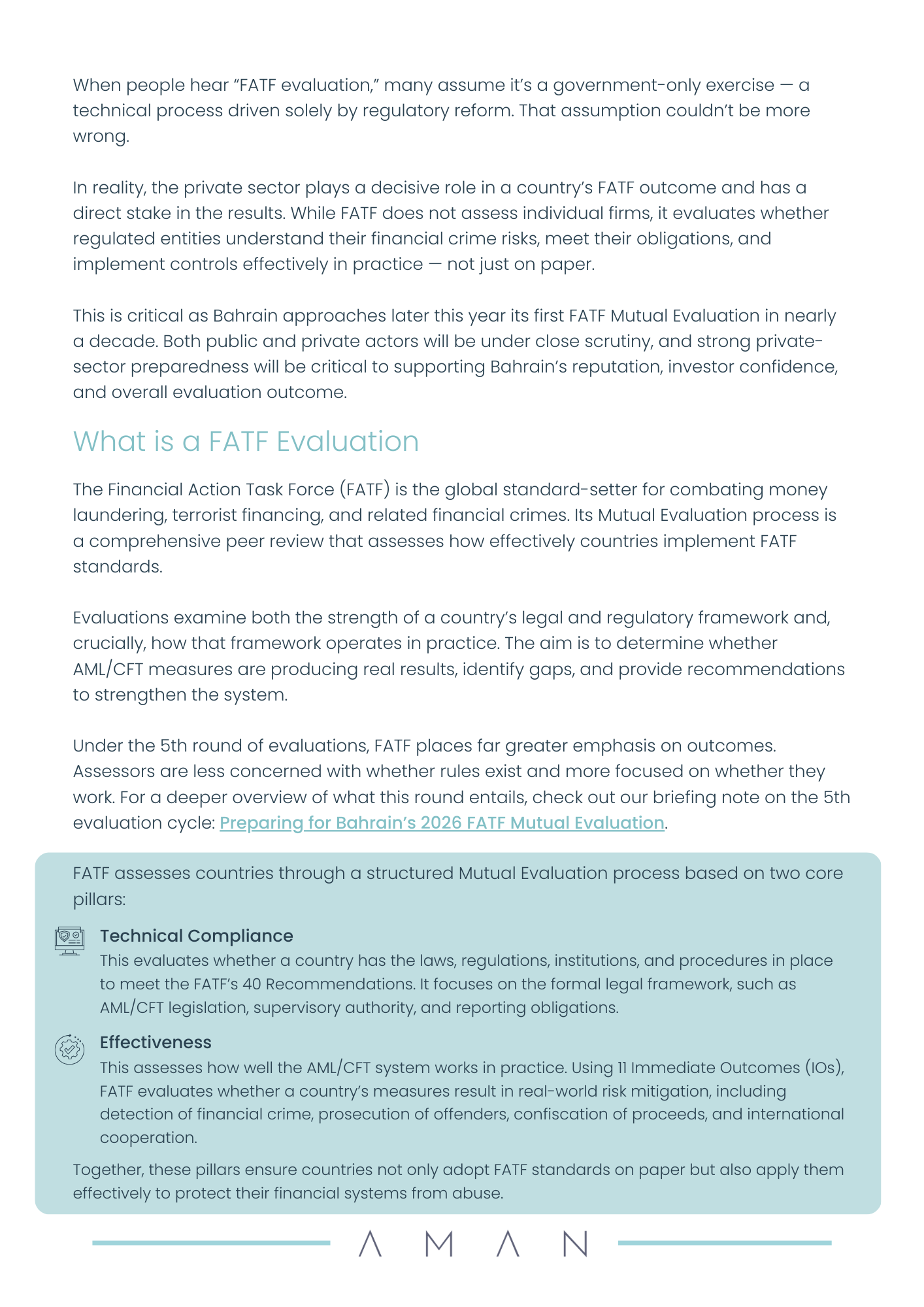
Many assume a FATF evaluation is a government-only exercise. It is not. While FATF does not assess individual firms, it evaluates whether regulated entities understand risk, meet obligations, and implement controls effectively in practice, not just on paper. With Bahrain approaching its first Mutual Evaluation in nearly a decade, private-sector preparedness will be a decisive factor for national outcomes, investor confidence, and international trust.
FATF assesses countries using two pillars: Technical Compliance (laws, regulations, institutions, procedures aligned to the 40 Recommendations) and Effectiveness (how well the system works in practice across 11 Immediate Outcomes).
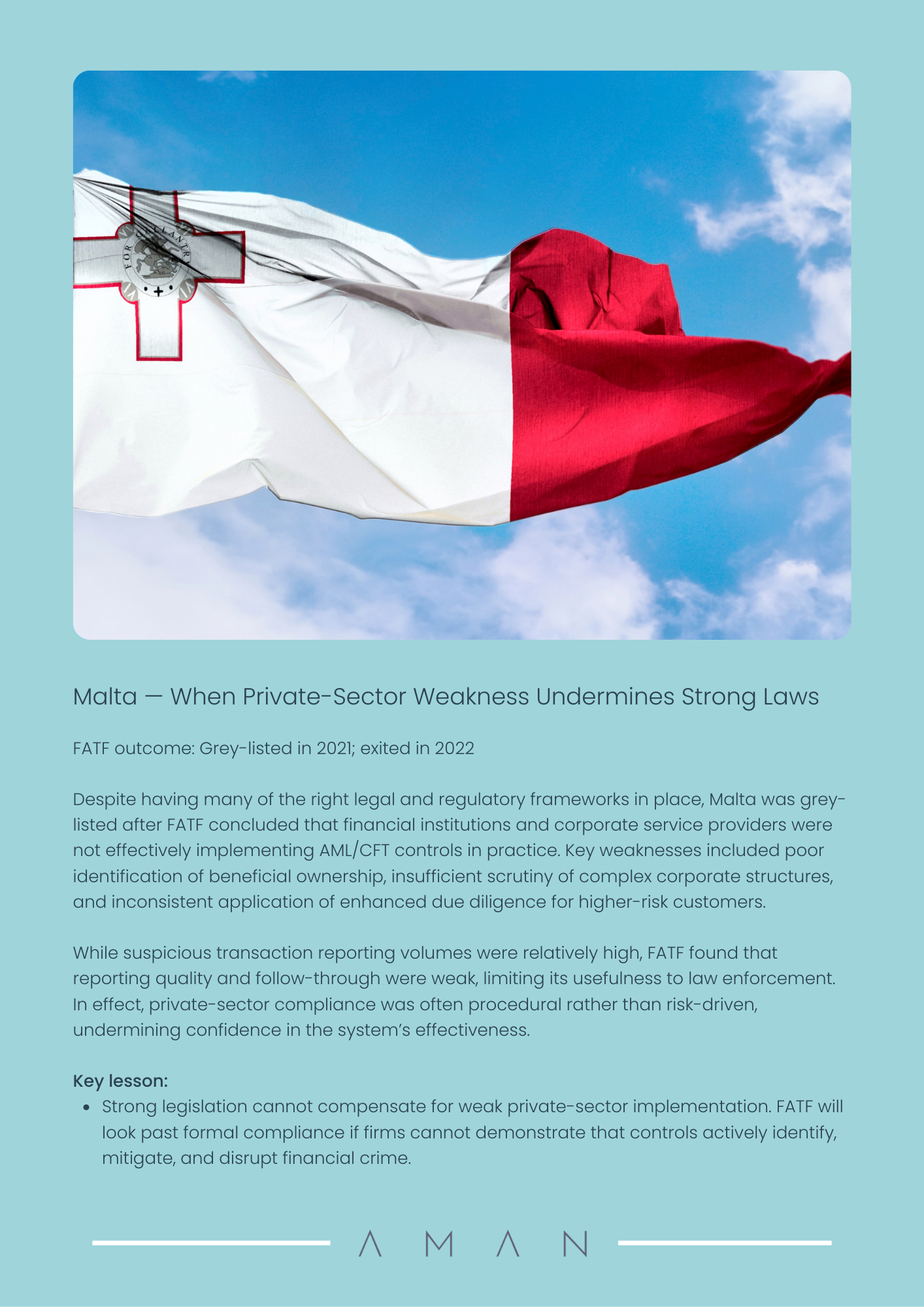
A strong outcome signals credibility to investors, global banks, and international partners. Weak outcomes, including grey-listing, can increase due diligence, raise compliance costs, and reduce capital inflows.
Assessors will look for outcome-proof over policy, embedded risk-based controls, beneficial ownership verification in practice, STR quality that supports investigations, and functioning sanctions and proliferation-financing controls.
FATF evaluates whether AML/CFT measures work across the whole system. That means regulated firms form part of the evidence base: how risks are identified, how beneficial ownership is verified and used, how suspicious activity is escalated and reported, and how controls perform consistently over time. Private-sector readiness can materially influence national outcomes and reduce friction from elevated country-risk perceptions.
Lorem ipsum dolor sit amet, consectetur adipiscing elit, sed do eiusmod tempor incididunt ut labore et dolore magna aliqua. Ut enim ad minim veniam, quis nostrud exercitation ullamco laboris nisi ut aliquip ex ea commodo consequat. Duis aute irure dolor in reprehenderit in voluptate velit esse cillum dolore eu fugiat nulla pariatur.
Block quote
Ordered list
Unordered list
Bold text
Emphasis
Superscript
Subscript